Most building businesses hit a ceiling. You’re busy on site, jobs are coming in, but growth feels limited.
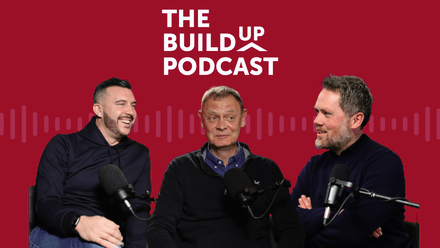
In this episode of the Buildup Podcast, host Amy Voce is joined by Aidan Cropper, Managing Director of IPSUM UK, and David Gutierrez, Director of Nest Building Group alongside Alex Strikovs, Director of Home Republic Limited. They share what it takes to grow from working on the tools to running a structured, high-performing construction business.
Why this topic matters for building businesses
Growing a construction business brings a shift in responsibility. It’s no longer just about delivering quality work on site. It’s about managing people, projects and client expectations at scale.
Many SME builders reach a point where the workload increases, but the business doesn't move forward. This episode focuses on how to break through that stage and build a business that can grow sustainably.
As Alex Strikovs explains: ’The more responsibility you can take on, the bigger, more profitable, and more respected the business becomes.’
Key risks, challenges or pressures discussed in the episode
The conversation highlights the real pressures that come with scaling:
- Staying on the tools for too long and limiting business growth
- Taking on overheads without clear return
- Managing complex residential projects with high client expectations
- Maintaining quality as the team grows
There’s also a common mindset challenge. Many builders delay growth because they feel they need to stay in control of everything.
As discussed in the episode: ‘At first, you think: no one can do this better than me. But then at some point you have to delegate.’
How to grow a building business: practical steps
In this episode, you’ll learn about:
- Stepping back from day-to-day site work to focus on the business
- Hiring people into defined roles as the workload increases
- Improving how projects are quoted, planned and managed
- Creating clearer communication with clients from the start
These changes are gradual, but they underpin long-term growth and stability.
Specialist or expert insight
A key theme is the transition from builder to business leader.
As companies grow, the role changes. It’s no longer about managing tasks directly but managing the people who deliver them. That shift is often learned through experience, not formal training.
The discussion also highlights the value of continued development, whether through qualifications, industry bodies or learning from other builders.
Systems, professionalism or raising standards
Systems are central to scaling a construction business.
From project management to defined team roles, the episode shows how structure improves consistency, efficiency and client experience. Without it, growth becomes difficult to manage.
Alex summarises the shift: ‘It becomes a company – not just one person.’
Stronger systems also raise standards. They help deliver more consistent outcomes for clients and support a more professional, sustainable business.
FMB membership gives you the tools to grow
The episode highlights how FMB membership supports builders as they grow.
As an FMB member, you can access contract templates, business support and a network of other builders that can help you strengthen how your business operates and manage risk more effectively. Explore FMB membership today.
Watch the full episode
If you’re looking to step off the tools, build a stronger team and run a more structured construction business, this episode is worth your time.
Watch the full episode to hear directly from builders who have scaled their businesses – and see what you can apply in your own.
Full episode transcript
Read the full transcript of this episode below. This has been lightly edited for clarity and readability.
Build Up Podcast - How to scale your construction company
Podcast transcript – Season 3 Episode 2 – Builder Journey
[Intro music plays]
AMY VOCE: Hello, I'm Amy Voce and you are listening to The Buildup Podcast, brought to you by the Federation of Master Builders. I'm joined as always in the studio by my co-hosts — Aidan Cropper, Managing Director of IPSUM UK in Nottinghamshire, and David Gutierrez, Director of Nest Building Group in Surrey — both proud FMB member companies.
Today's episode is all about a builder's journey. The story of how a business is born, how it grows, and what it takes to build something truly exceptional in the industry.
Don't forget to hit subscribe so you never miss an episode.
Our guest today runs one of the UK's most respected construction companies. They've won the FMB Master Builder Awards National Business of the Year twice — in 2023 and 2025 — plus the prestigious Houzz Build Awards. We'll explore how it all started, their key business decisions, the challenges faced, and the vision ahead.
They've grown from a small team to 65 people, delivering impressive residential projects with a reputation for precision, innovation, and exceptional client experience.
So welcome, Alex Strikovs, Director of Home Republic Limited — an award-winning design and build company in London. Alex, welcome to the podcast.
ALEX STRIKOVS: Thank you.
[SECTION: Early Days & The Founding of Home Republic]
AMY VOCE: Let's start at the beginning. What inspired you to start Home Republic, and what did those early days look like for you?
ALEX STRIKOVS: The early days were quite challenging. I was working as a carpenter myself and studying for my master's degree at night. I was travelling to London from Birmingham — we worked all across the UK — and then travelling back late at night to study and keep working hard.
We were working on these large, beautiful old houses for a company — I think they were from Middlesbrough. It was a good company, and they gave us a lot of opportunities to work on wonderful projects where we could try all kinds of different work.
We watched how these houses transformed from neglected properties into something absolutely amazing. That's where I personally found my inspiration.
AMY VOCE: Did you always know the kind of business you wanted to build? Or did it evolve more slowly?
ALEX STRIKOVS: I never really knew what I wanted to do. I was constantly searching, trying to find motivation and work out what I truly wanted. But at some point, I became friends with an architect, and he suggested taking on some separate, smaller work. It took me a while to accept that decision, but once I did, I realised — yes, that's what I want to do. And it comes with quite a lot of responsibility.
[SECTION: Identifying the Gap in the London Market]
AMY VOCE: What gap did you see in the London residential market that you wanted to fill?
ALEX STRIKOVS: I always wanted to become a larger, more professional organisation. When I started, I'd walk past big sites with Considerate Constructors banners, or see vans with the Federation of Master Builders logo. I'd think: that's what I want. We heard so many stories about cowboy builders and terrible client experiences, and I really wanted to create something that was inspiring — for clients as well as for us.
[SECTION: Aidan & David — Did You Know Where You Were Headed?]
AMY VOCE: Aidan, David — when you started your businesses, did you know which direction you were going, or did it evolve?
AIDAN CROPPER: For me it was the same, really. You start off in a trade background and you start to see and seek out opportunities. We started off in exactly the same way, and it's been an amazing journey. It's tough, but it gives you the freedom to push yourself, to enhance your company and take it to the next level. You also start doing things you're genuinely interested in. It completely resonates with what you just said.
AMY VOCE: Same for you, David?
DAVID GUTIERREZ: Yeah. When we started, you don't know where it's going to go — because you just love your job. You get inspired by other building companies. Walking past those projects, seeing other builders I knew, I'd think: I'd love to be at that level. But it naturally evolves. If you're good at what you do, if you're considerate and passionate, it just naturally goes that way. And that grows your ambition. When you look back over a ten-year period, it's a whirlwind — and now we have a responsibility to continue and grow.
[SECTION: The First Turning Point — Embracing Responsibility]
AMY VOCE: So what was the moment — or the project — when you thought: we are a different company now. We're at level five and I want to aim for level ten?
ALEX STRIKOVS: Right at the beginning, when we started going into people's homes, I realised it's a huge responsibility. It's a significant purchase for people — and they're inviting you into their home, into their family. Embracing that responsibility was a major step. The more responsibility you can take on, the bigger, more profitable, and more respected the business becomes.
We moved a little slowly at first, but we built a foundation of knowledge and expertise. Like building a house — if the foundation is good, you can grow quickly on top of it.
AIDAN CROPPER: That's interesting, because even fifteen years in, I'm still laying foundations to get to the next level. I've just brought in a consultant Finance Director — Serena — and she has been amazing at putting financial planning and processes in place to enable growth. It never stops, does it? You're always thinking about the business, always looking for ways to improve.
[SECTION: Growing the Team — Delegation and Finding the Right People]
AMY VOCE: How did you find that initial growth phase? For me, one of the most challenging parts was going from working on my own — or with one apprentice — to taking on more projects and more people. How did you find that, and how did you find the right people to do it with?
ALEX STRIKOVS: I never went into a formal partnership, but it's all about people. Some of the guys who joined the company at the start as apprentices or labourers are now managers — practically my business partners. And that's what you're most proud of.
You start to notice that they want to do better. And there's a certain responsibility on you as well — they care about the business. They treat it like their own.
DAVID GUTIERREZ: That's a credit to you. You've created the ethos and the foundation for them to believe in the company they work for. You look after the guys who look after you — that's the most important thing about growing a business.
[SECTION: Key Decisions & Turning Points — Scaling to 65 People]
AMY VOCE: Going from a small business to employing around 65 people — what were the key decisions or turning points that really shaped that growth?
ALEX STRIKOVS: One of the key decisions was accepting responsibility at a much deeper level. I remember I was walking past and I saw a company — Willmott Dixon — one of the UK's oldest, most established construction firms with over a hundred years of history. I started researching them and I saw their slogan: "Building houses, building lives."
And that's when I realised — yes, we are building someone's life. Someone is going to build a family in this home, raise children, grow old, find success — whatever that looks like. It's incredible.
So that was the turning point: let's do something truly excellent. Let's care about what we do. Let's build systems — not just complete random jobs.
[SECTION: Systems — The Engine Behind the Growth]
AMY VOCE: So systems became a big part of getting to that next level?
ALEX STRIKOVS: Systems are everything. You need a proper accounting department, human resources, project management — and a reward system based on individual performance, not random bonuses. That's what motivates people to work hard.
AIDAN CROPPER: How did you get to that point? Because when you see a project manager or a QS as a line on a budget — that's a massive overhead and a big wage. Did you just take the leap and hope it works, or was it gradual?
ALEX STRIKOVS: It's gradual. Step by step. At first you think: no one can do this better than me. But then at some point you have to delegate. You have to let go and trust people. And when you trust them — when you stop the crazy controlling — and you find the right people, it inspires them enormously. You see these people working well, then as good as you — and sometimes better than you. They give you ideas and inspiration.
That is what builds the system. It becomes a company — not just one person.
DAVID GUTIERREZ: There's that saying: farm out the 80% and retain the 20% that you're exceptional at. That's the importance of growing — otherwise you'll end up doing everything yourself forever.
[SECTION: For Builders Starting Out — Practical Advice on Scaling]
AMY VOCE: There are probably a lot of builders listening to this thinking: Home Republic has 65 people — that's the dream. But I've only got myself and three guys. How do I even start getting there?
How do you juggle accounts, HR, being a parent — all of it?
And was it a five-year journey, or something sharper?
ALEX STRIKOVS: It was all gradual. There were milestones — we'd reach one level, stabilise, then make a change and step up to the next. And the most important thing is delegation. Some people watching this will be on sites themselves doing everything and wondering how they can ever step off the tools. No one is going to do it better than you — at first. But you have to make the change. You have to find people. You have to stop working manually and focus on developing the company and pushing the business forward.
[SECTION: Investing in People — Training, Qualifications & Development]
AMY VOCE: You invest significantly in your staff — your foremen become managers. What kind of training did you put in place to develop them?
ALEX STRIKOVS: We've done a great deal of training. Our managers and foremen are now very well-educated — they all have their NVQs, various courses, qualifications. Not many companies of our size would have a workforce this educated. These are vocational qualifications mostly, but also specialist courses. It brings them real responsibility. They know there's always more to learn, and it gives them a professional standard they never fall below.
AMY VOCE: Do you also use internal tools — tracking apps, project timelines?
ALEX STRIKOVS: Yes — we use a lot of innovative features, apps, and software. We actually developed our own surplus materials tracking app, which works very well. And it's about finding the right business model. In London especially, you either move with technology or you get left behind.
[SECTION: Taking on Bigger Projects — Being Brave Enough to Scale Up]
AMY VOCE: Did you feel you had to be brave and take on the bigger projects?
ALEX STRIKOVS: Absolutely. We were never scared — we always embraced those opportunities. The bigger, the better, the more challenging. It's about the level of responsibility you choose to accept.
[SECTION: Leadership — Managing Managers, Not Just Tasks]
AMY VOCE: What did you learn about leadership as the company grew?
ALEX STRIKOVS: There's a big difference between being a boss and being a leader. You have to become a manager of managers — that's a critical step. You're no longer managing all processes yourself; you're managing the people who manage those processes. You still maintain communication across the team — that's your responsibility — but you create a system where everyone knows exactly what their role is.
The way I did it was through YouTube and online courses — there's an amazing programme that gave me a real understanding of how large corporations and companies are structured. I designed the company structure I wanted Home Republic to become.
I then realised I had been doing ten or more roles simultaneously — quantity surveying, hiring, project management, everything. So I started hiring the right people for those specific roles — the ones consuming most of my time.
AMY VOCE: Did investing in people become a turning point for you as well, Aidan and David?
AIDAN CROPPER: You have to invest to grow. Upskilling your staff — and yourself — is growth in itself. If you want to get to the next level, you're going to have to kiss a few frogs. There'll be some hires that don't work out — but you keep going.
The thing is, coming from a trade background, you don't necessarily know the corporate structure you need to get there. I made an investment — I was doing estimating myself in the evenings, taking hours of my time. I was using external estimating companies, which was expensive. So I made the decision to bring someone in-house. That person has been remarkable — stepping into other roles as needed. Once you start making those targeted hires, it really enhances the business and takes you to the next level.
But you also have to balance your overheads — it's not just about wanting to invest. You have to justify the spend. Can you justify an office? A yard? Machinery? It's all of that, building step by step.
DAVID GUTIERREZ: I'll tell you what was hardest for me mentally. When you come from the tools — you do an hour's work, you get paid for it. Then you move into managing and growing the business, and you hire someone who isn't producing an instant, tangible return. They become an overhead. That was the bit that took me a while to get my head around. But once I did — that open-mindedness enabled everything.
[FMB membership mention]
AMY VOCE: So much of what Alex has described links directly to client experience. And if you're responsible for a building company, don't forget that FMB membership gives you access to business support — including a professional suite of contracts to help your projects run smoothly. Visit fmb.org.uk/membership to find out more.
Which brings us nicely to our next topic.
[SECTION: Client Experience — Trust, Transparency & Consistency]
AMY VOCE: What's been the key to creating that level of trust and consistency with your clients?
ALEX STRIKOVS: Consistency, resilience, and transparency. In construction, everything starts with the quotation. It has to be very detailed and as accurate as possible. When companies provide a one-line quote — that's not professional. Unless it's massively overpriced, it's never going to come in on budget, and it's never going to be delivered in the planned timeframe.
Builders and construction companies need to have a very clear vision of exactly what they're delivering — and they need to be able to explain it to the client clearly, step by step.
When we come into someone's home, we need to be diligent. People move out and hand over their most precious asset to us to renovate and develop. Communication is the key to customer experience. Be available — always have someone who can answer the phone. Have a system of meetings and processes so clients can see what's actually happening at every stage.
[SECTION: Communication Tools & Technology in Client Management]
AMY VOCE: What communication tools do you use with your clients? WhatsApp, project management platforms?
ALEX STRIKOVS: We use WhatsApp groups and a lot of email. We also record our Zoom meetings and use AI to transcribe them — it's very efficient. And we're developing our own application where clients can log in and access all their project information in one place.
DAVID GUTIERREZ: That's the dream. There are some good communication platforms for builders now — apps where you can retain all your documents, minutes, site records. I've tried quite a few. The challenge is the workforce. They just prefer WhatsApp because everyone has it and knows how to use it.
ALEX STRIKOVS: Exactly. It just works.
[SECTION: After Completion — Post-Project Service & Maintenance Contracts]
AMY VOCE: What about after a project is completed? How does your company go above and beyond?
ALEX STRIKOVS: Post-project service is critical for any serious company. You need to be there for the defect liability period. You need to provide all warranties, guarantees, and explain every option clearly. For larger projects, you should be able to offer ongoing maintenance contracts.
We've built a community centre, for example — we still service it. Even smaller jobs that come in from that client, we do them. You need to keep people on for maintenance and snagging — and this pays you back. It gives clients trust. They see you as a long-term partner in their journey.
AMY VOCE: When you're providing ongoing maintenance — is that a separate contract after defects and warranties have been addressed?
ALEX STRIKOVS: Yes. We started offering it two or three years ago, and it's growing steadily as we move into larger projects where maintenance is built into expectations. Defect liability is one thing, warranties are another — but then there's day-to-day wear and tear, things that get damaged or simply need replacing. That's where a maintenance contract comes in — visiting once or twice a year, doing essential work like replacing sealants, touch-ups, small improvements. You outline all the work required, discuss any amendments, and price it separately.
DAVID GUTIERREZ: I think that is a fantastic, clever move. We tell our clients to re-do their silicone every two years maximum — a lot of people just leave it until something leaks. With boilers, that's standard. But I've never really considered offering it formally on domestic projects.
ALEX STRIKOVS: It's not for every project — but for larger ones, where people want to stay in their home long-term and maintain it to the same standard, they're very happy to pay for that as an additional service. You're preserving what you built.
DAVID GUTIERREZ: It's a great move because when you revisit a house you've maintained — the finish is still sharp. That's your work. The client appreciates it. And you appreciate it too. Absolutely right. And it keeps the relationship alive. A lot of builders listening will relate to going back to a client for a second or third project — that relationship continuity is priceless.
[SECTION: Maintaining High Standards in a Fast-Moving Market]
AMY VOCE: How do you maintain such high standards in a market as fast-moving as London?
ALEX STRIKOVS: By working nights — no, seriously: by changing with the market. Constantly amending your vision, your targets, always improving. At one point we believed that better service only meant spending more and paying people more. And yes, paying people well is always a goal — we constantly increase salaries and index them. But optimisation and systemisation are actually a far more powerful driver than simply spending more. That saves you money, saves your clients money — and it gives you the competitive edge to deliver a truly exceptional service.
[SECTION: Advice for Builders — Improving the Customer Journey]
AMY VOCE: What advice would you give builders who want to improve their customer journey?
ALEX STRIKOVS: Systematise. Build a system — that's the most important thing. And remember: we're not born as leaders or business people. We become them. That means continuous personal development, and investing in educating the people around you. Be open to new systems, new options, new ways of working. If you're closed off, you'll never achieve your potential.
AIDAN CROPPER: A hundred percent. It's about process. A systematic approach to business gives your clients reassurance that you know what you're doing — and if they trust your process, it works.
DAVID GUTIERREZ: It's communication. Transparency throughout the business — that makes all the difference. And on the personal development point — we're so lucky now. Twenty years ago, there were no podcasts, no resources like this. I did a university business development and management course after starting my business — genuinely game-changing. And networking — attending events, being part of the FMB and other organisations. Even one takeaway from each experience builds you up over time.
DAVID GUTIERREZ: I always echo this: the construction industry is one where you can just evolve and keep going. From carpenter to small company, to medium, to enterprise — this industry genuinely offers that growth arc. The opportunities are endless.
If you want to reach a different level — you can contact the CIOB, for example, and pursue the chartered builder route. You can develop project management skills at a completely different level. Or look at sustainability — we've just moved into ICF construction. Sustainable building is huge right now, and you can go and learn it. You feel like you're making a real difference.
[SECTION: Managing Demand Without Compromising Quality]
AMY VOCE: Alex, how do you manage excessive demand without compromising quality?
ALEX STRIKOVS: At a certain point, you have to prioritise. We've created a system where we assess each lead from different angles — location, budget, client commitment, how engaged they are — and all the surrounding factors. You have to be selective about the projects you take on. At a certain level, you need commitment not only from your team, but from the client and from the professional team around them — architects, engineers, everyone. Selecting the right projects is as important as doing the work well.
[SECTION: The Next Chapter for Home Republic]
AMY VOCE: You've achieved an incredible amount already — two national awards, a strong team, a reputation many builders dream of. Looking ahead: what does the next chapter look like for Home Republic?
ALEX STRIKOVS: We'll grow significantly — at least doubling in the next couple of years. We'll develop our design and build offering further, build an even stronger team, and focus deeply on corporate culture and company philosophy. We've started running toolbox talks so that the entire on-site team understands who we are, what we stand for, and what we're trying to achieve together.
DAVID GUTIERREZ: I want to jump in here — because at the London Awards, I spent time with a lot of your staff from Home Republic. They genuinely believe in this company. They bleed Home Republic. It was so inspiring to talk to them. And I have no doubt whatsoever that you will grow exactly as you envision, because it's good for our industry. It's refreshing and inspiring for all of us.
[Applause]
ALEX STRIKOVS: Thank you. That means a lot.
[SECTION: Final Advice for Builders & Where to Find Everyone]
AMY VOCE: Is there anything you'd like to add, Aidan and David — for any builder who's listening and feeling inspired?
AIDAN CROPPER: Upskill. Listen. Go for it.
DAVID GUTIERREZ: Really listen to what's been said today — it's genuinely sound advice. At whatever stage you're at in your business, just make those calculated decisions, one step at a time. If there's an investment that you believe will help your business, make it. It really does make a difference.
AMY VOCE: Alex, thank you so much for joining us today. Tell everyone where they can find you and Home Republic.
ALEX STRIKOVS: You can find us at homerepublic.co.uk — and on Instagram, Houzz, and across all social media channels.
AIDAN CROPPER: Our website is ipsumuk.com — and we're on all social media platforms too.
DAVID GUTIERREZ: nestbuildinggroup.com — and social media as well.
AMY VOCE: If today's conversation has inspired you to think differently about how your business could grow — or how to strengthen your team culture and client experience — we'd love to hear from you. Email us at buildup@fmb.org.uk and tell us what you'll be putting into practice.
And if you're ready to take things to the next level, check out fmb.org.uk/membership to see how the Federation of Master Builders can help you grow.
Please like, subscribe, and hit the bell icon so you're the first to know about future episodes.
Thanks for joining us on The Buildup Podcast, brought to you by the Federation of Master Builders.
Join us next time for more tips and ideas to help your business grow and thrive.
[Outro music plays]
Subscribe and never miss an episode



Watch more in the series
Authors
The Build Up Podcast
Build Up is the FMB podcast for builders tackling the real-world challenges of running and growing a building business in the UK.


