
A house renovation cost can vary hugely depending on what you are changing, where you live, and how much hidden work the property needs once the project begins. A light refresh, including decorating, flooring, and a new bathroom, will sit at one end of the scale. A full home renovation involving structural work, rewiring, plumbing, external repairs, and a new kitchen will sit at the other end.
That is why there is no single price for renovating a house. The more useful question is what you should budget for the type of renovation you are planning and which parts of the job tend to drive costs up the fastest.
How much does a home renovation cost in the UK?
In practice, home renovation costs usually comprise a mix of major project items and smaller supporting costs. The big-ticket items are normally extensions, loft conversions, kitchens, bathrooms, and structural changes. But the total can rise quickly once you add professional fees, waste removal, building control, decorating and contingency. In general, budgeting guidance specifically recommends breaking your budget down into labour, materials, fixtures and fittings, professional fees, planning or building control, waste removal, and finishing costs before work starts.
For homeowners trying to sense-check an early budget, these are some of the most useful guide prices currently available:
| Renovation project | Typical cost |
|---|---|
| Single storey extension | £1,000 to £2,000 per m2 |
| Loft conversion (Velux) | From £30,000 |
| New bathroom | Around £5,000 |
| New kitchen | £10,000+ |
| Garage conversion | £13,000 |
| Double glazing | From £200 per window |
| New boiler | From £600 |
| New roof | From £13,000 |
These figures are useful starting points, but they are not quotes. The final house renovation price will depend on your location, specifications, site access, and whether the job uncovers issues such as damp, poor wiring, or structural defects.
What’s the average cost of the most common renovation jobs?
Breaking costs down by project type usually gives a much clearer picture of what your home renovation costs are likely to be, and it also helps you compare like-for-like when you start getting quotes.
Extension costs
If your renovation includes adding new space, an extension will often be one of the largest budget items. A single-storey extension typically costs around £1,000-£2,500 per m², making a standard 20 m² extension around £40,000.
However, costs rise in London and the South East, and professional fees can add a further layer to the overall budget.

Budgeting for a loft conversion
For homeowners who want more space without extending outward, a loft conversion is a good option, with costs ranging from £30,000 to £70,000, depending on the type of conversion. A Velux loft conversion starts from £30,000, while the popular dormer style averages around £50,000. At the upper end of the scale, hip-to-gable conversions average £60,000 and mansard conversions around £70,000.
Average cost for a new kitchen
Kitchen costs vary more than almost any other room because layout changes, worktops, appliances, and fittings all make a significant difference to the final price. New kitchens generally start from £10,000.
Bathroom renovation pricing
Bathrooms can look like smaller projects on paper, but they combine plumbing, electrics, tiling, ventilation and fitted products in one compact space. The average cost of a new bathroom is around £5,000.

Garage conversion costs
Garage conversions are often seen as a cost effective way to create extra living space, but the final price depends on how the room will be used. The average cost of a garage conversion is around £13,000.
How much does labour cost per day?
Labour can make up a significant share of any house renovation, especially when several trades are needed at different stages of the project.
Expect to pay:
- Plumber: £325 to £375 per day
- Kitchen fitter: £250 to £350 per day
- Joiner: £240 to £360 per day
- Electrician: around £400 per day
- Plasterer: a round £300 per day
- Window fitter: £25 to £35 per hour
A good rule of thumb is to treat labour as one of the biggest parts of your budget. The best way to keep costs under control is to compare quotes carefully and make sure labour, materials, and VAT are clarified from the start.
Can I cut home renovation costs by knocking through instead of extending?
If your goal is to improve layout rather than add square metres, opening up the existing footprint can be much cheaper than building an extension.
Knocking down an internal wall typically costs around £3,500, depending on whether you’re taking out a load bearing wall. If it is structural, installing an RSJ or another support will increase the cost.
Before budgeting for this kind of change, it is worth checking:
- If the wall is load bearing
- If a structural engineer will be needed
- If a party wall surveyor may be required
- What services run through the wall
- How much making-good work will follow once the wall is removed
What pushes home renovation costs up fastest?
Most budgets do not go off track because of one dramatic decision. More often, costs creep up through a combination of structural complexity, specification changes, and overlooked extras.
The biggest cost drivers are usually:
- Structural work : Such as removing load bearing walls, installing steelwork or dealing with difficult ground conditions.
- Location : London and the South East typically cost more for labour and site logistics.
- Specification : This includes stone worktops, premium glazing, bespoke joinery, and high-end appliances.
- Services : Such as rewiring, replumbing, moving drainage, or upgrading ventilation.
- Professional and compliance costs : These include surveys, architectural drawings, structural calculations, planning and building control.
External repairs can also push up costs once work starts. If your renovation uncovers tired brickwork, cracked finishes, or weathered walls, jobs such as repointing bricks or repairing house render may need to move from “later” into the main renovation budget.
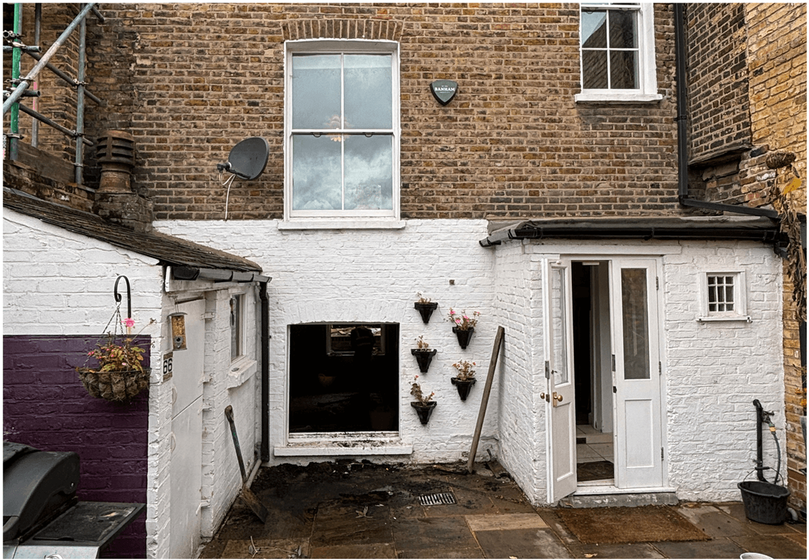
Home renovation: Before and after
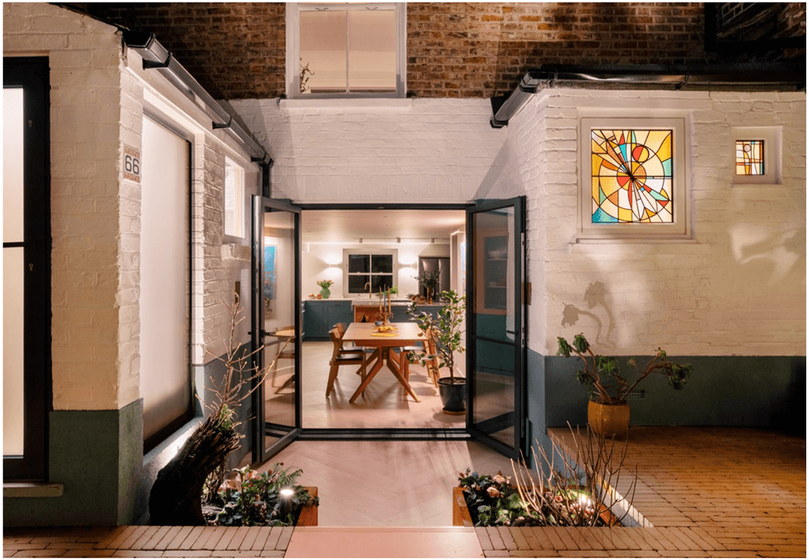
Home renovation: Before and after
What hidden renovation costs do homeowners forget?
This is where many home renovation cost plans fall short. Homeowners often focus on the headline-building work and underestimate the supporting costs that surround it.
The most commonly missed items are:
- Architect, designer, or structural engineer fees
- Planning application or lawful development costs
- Building control fees
- Party wall surveyor fees
- Scaffolding hire
- Skip hire and waste removal
- Temporary kitchen or bathroom arrangements
- Storage or short-term accommodation
- Final decorating and finishing
- VAT, where applicable
- Contingency for defects uncovered once work begins
It’s also important to check for any assumptions in your quote. If your builder has allocated a modest budget for tiles, sanitaryware, or kitchen units, and your choices end up costing more, that gap will come straight back to you.
Is it cheaper to renovate all at once or room by room?
If the work is substantial, renovating all at once can often be more cost effective. It reduces repeated labour, helps trades work in the right sequence, and can avoid paying for temporary fixes that are later undone. It also means you are less likely to redecorate or refloor an area only to disturb it again when the next phase starts.
That said, a phased renovation can still be the right choice if the budget is tight or you need to remain living in the property. In that case, the best-value order is usually to tackle the building fabric and services first, then move on to finishes.
A sensible order is often:
- Structural repairs and weatherproofing
- Drainage, plumbing, heating, and electrics
- Insulation and ventilation improvements
- Kitchens and bathrooms
- Plastering, flooring, and decorating
- External appearance and non-urgent upgrades
How can I keep home renovation costs under control?
The best way to control home renovation costs is to make fewer expensive changes after the work has started. Clear planning nearly always saves money.
It’s sensible to get at least three quotes, make sure you are comparing like for like, discuss your budget upfront, and insist on a detailed written quote rather than relying on vague estimates. It’s also recommended to sign a contract that clearly sets out the scope of work before the project begins.
- Set a realistic contingency before you start
- Decide early where you will spend and where you will save
- Keep services in the same place where possible
- Avoid changing layout mid-project
- Check whether VAT is included in every quote
- Choose a builder with relevant renovation experience, not just the lowest price
Why choose an FMB builder?
Choosing the right builder is one of the most important parts of any renovation project.
An FMB builder provides additional reassurance because our members are inspected and vetted before they can join. That means you're not just relying on a website listing or a few online reviews, you're choosing a building company that's been through checks designed to give you more confidence from the outset.
Using an FMB member can also make the process feel more straightforward. Whether you are planning a full-house renovation, a kitchen update, or a structural alteration, working with an FMB-trusted builder can help you feel more confident in standards, professionalism, and accountability.
Frequently asked questions about house renovation costs
How do local authority fees and building regulations impact my renovation budget?
When planning your renovation budget, it's easy to focus strictly on building costs, but local statutory compliance fees need consideration early on. Building regulations and fees will aplly in sone circumstances - for example:
- Removing a load-bearing wall requiring structural steel (RSJ) installation
- Relocating a kitchen or bathroom (ventilation and drainage regulations apply)
- Changing the layout (fire safety laws may apply)
So, even if your structural changes fall completely under Permitted Development rights (meaning full planning permission isn't required), you must factor in local Building Control fees.
Every local authority operates under its own charging scheme, and fees scale based on the estimated value or exact nature of the work. These local council fees can add anywhere from several hundred to over a thousand pounds to your initial budget. Plus, if your home is a designated Listed Building or sits within a Conservation Area, you are liketly to also specialist architectural drawings and formal applications to your local authority before work can commence. All of which add a cost.
Do I need to budget for a Party Wall Agreement when renovating?
If your renovation involves structural work on or near a shared boundary line, then the Party Wall etc. Act 1996 legally applies. This can include jobs like:
- Inserting a steel support beam (RSJ) into a shared wall
- Damp-proofing adjoining brickwork
- Digging foundations near an adjacent building
While keeping things open and friendly with your neighbours is always the best approach, the formal notice process is a legal requirement. If your neighbours request independent surveyors to sign off on the work, it can introduce mandatory professional fees into your project budget before physical building work even begins on-site. For a complete step-by-step breakdown of how this legal process works and your responsibilities as a building owner, check out our Ultimate Guide to Party Wall Agreements.
Can I get a VAT reduction for energy-efficient renovations?
Yes, and it can be a significant saving. Under current UK government policy, a 0% VAT rate applies to the installation of many energy-saving materials (ESMs) in residential homes. This relief is currently scheduled to remain in place until 31 March 2027.
This zero-rating applies to the professional installation of technologies such as air source heat pumps, solar panels, and insulation. For a major upgrade like a heat pump or a full loft insulation project, this can save you thousands of pounds compared to the standard 20% VAT rate. However, to qualify for the 0% rate, the work must be carried out by a professional installer; DIY projects or standalone material purchases do not qualify.
Do new energy efficiency regulations increase renovation costs?
While modern Building Regulations (specifically Part L) have introduced stricter requirements for insulation and heating efficiency, these can be seen as a long-term investment in reducing your energy consumption and bills. When you undertake a major renovation - especially one involving structural changes or extensions - your project must meet updated standards for thermal performance (U-values) and ventilation.
While these requirements can increase your upfront material costs for high-spec glazing or premium insulation, they significantly reduce your home's long-term running costs. Plus, with the launch of the 2026 Warm Homes Plan, there is increasing support for homeowners through grants like the Boiler Upgrade Scheme, which is based on your property's eligibility (rather than tested on personal means) and currently offers up to £7,500 toward qualifying low-carbon heating systems to help offset these initial expenses.