We’ve launched a refreshed suite of builder contract templates, available exclusively to FMB members. These contracts have always provided a clear, fair and straightforward agreement for you and your clients. Now they go further. They have been updated to reflect the Building Safety Act 2022 (BSA) so you can stay compliant without becoming a legal expert.
Put simply, they help you define who is responsible for what, in language that everyone can understand.
Why use FMB contracts?
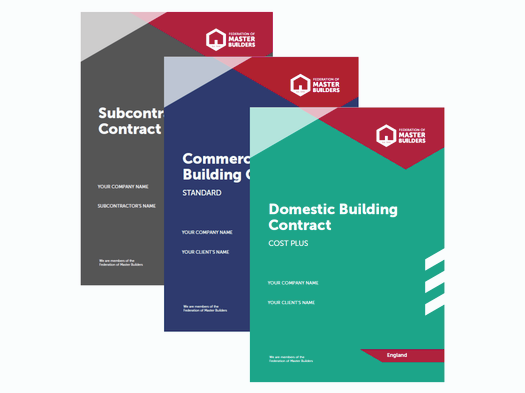
The new contracts have been written by legal experts with the aim of being easy to use for both builders and clients, avoiding jargon and unnecessary length. They are:
- Concise and legally robust – around 14–15 pages (compared to 80+ for other brands) so clients don’t feel overwhelmed.
- Plain English throughout – no jargon, no unnecessary complexity.
- Suitable for different types of work, with multiple versions to suit different projects, including commercial, domestic, and one specifically for small jobs.
- Tailored for all four nations, reflecting differences in regulation across the UK.
- Fully aligned with the FMB code of conduct, which requires members to use a written contract for every job.
- Exclusive for members, and designed with direct input from builders, lawyers and the Building Safety Regulator’s competence experts.
By using an FMB contract, you can feel confident that the fundamentals are covered – from payment terms to dispute resolution – in a way that protects both you and your client.
Browse FMB contracts
Take a look at our suite of contracts to see how they could work for your business. If you're already an FMB member, log in to download the templates and start using them today.
Get clarity on duty holder roles
A major advantage of the new contract suite is the clear explanation of duty holder roles under the BSA. These clauses spell out the responsibilities of the principal contractor and principal designer, helping you avoid misunderstandings and project delays.
Your contract will make clear who is responsible for:
- Planning, managing, monitoring and coordinating the project
- Providing workers with instructions and information
- Reporting concerns
- Checking competence of subcontractors
- Notifying clients if designs or materials do not comply
Having duty holder roles signed and agreed in your contract is more than just a formality. It protects your business by reducing the risk of disputes, and it reassures clients that you are managing the project in line with current legal requirements.
Why competency statements matter (and how SKEB fits in)
Competence is central to the Building Safety Act. The law requires everyone carrying out building work to be able to demonstrate the right skills, knowledge, experience and behaviours – SKEB – for the job.
To help you with this, we’ve created simple competency statement templates for members. These are short, practical forms you can complete for yourself and your subcontractors.
Using competency statements helps you to:
- Demonstrate compliance with your legal duties.
- Show clients you are competent and working to recognised standards.
- Record your experience with similar projects.
- Take reasonable steps to check subcontractor competence.
- Avoid accidentally taking on design responsibilities that fall outside your expertise.
In a competitive market, showing that you meet SKEB requirements can set you apart. Many domestic clients won’t know what their own duties are under the Act, so walking them through the competency process can build trust and strengthen your professional reputation.
New contracts, improved flexibility
With the new contracts, we’ve also listened to our members. Our previous contracts have been tried and tested by our members over many years, so we asked the builders using them what we could do better.
The new contracts now include:
- Flexible clauses and payment terms
- Optional advance/deposit mechanisms
- Flexible defects periods
- Dynamic front page – personalised with your business name and your client’s name
These updates help you tailor each contract to the needs of your business and the expectations of your client, without compromising legal clarity.
Show clients you’re a builder they can trust
Using contracts that reflect current legislation sets the tone from the start. Clients can easily see:
- Who is responsible for each part of the work.
- How design responsibilities are divided.
- What their own obligations are.
Most domestic clients don’t realise they have duties under the Building Safety Act. Taking the time to explain why the contract includes these points shows professionalism and care, and helps prevent misunderstandings later.
Get started with the new contracts
FMB members can log in now to download the full suite of updated contract templates and competency statements. They’re ready to use whenever you need them, as part of your membership.
You can also find out more about the new contracts with our on demand webinar where we spoke to lawyer and contracts expert Sarah Fox about the changes.
Not yet a member? You can browse what’s available on our website and see how the contracts work in practice. If you want full access along with expert business support, guidance on the Building Safety Act and more, you can join the FMB to start benefiting straight away.
Browse FMB contracts
Take a look at our suite of contracts to see how they could work for your business. If you're already an FMB member, log in to download the templates and start using them today.