
Guest blog by Greg Wilkes, Founder of Develop Coaching, author of Building Your Future, and host of the Develop Your Construction Business podcast.
Most £1m builders think the next breakthrough comes from stacking more projects. Let’s be honest: growth comes from tighter structure, clearer leadership and dropping the chaotic habits that held you back at £500k. If you are still pricing late at night, juggling sites through WhatsApp and hoping margins behave themselves, then next year will look far too similar to last year. Revenue may increase, but pressure increases with it.
The good news is that you do not need a massive team or complicated software to bring calm and predictability. You need leadership habits that scale with you as you grow. These six moves will help you build a business that runs with control, confidence and consistency.
A builder in Kent grew to around £1.2m. His work quality was excellent and the enquiries kept coming, yet his weeks were chaotic. He was on site early, on the phone all day and pricing until late. When we stripped the business back, the issue was not a lack of work. It was a lack of structure. Once he built a simple 12-month forecast, introduced a real 90-day programme, set up structured pricing and formed a weekly planning rhythm, everything stabilised. Margins rose by 15–20 percent, projects ran cleaner and he finally had time to stay visible, which brought in more enquiries.
1. Set a 12-month freedom forecast
Most £1m–£3m builders enter the new year with a rough idea of what they want to earn but no precise plan to achieve it. A simple Freedom Forecast changes that. It forces you to see your real overheads, your workable margin, the number of projects you can sensibly deliver and the staffing support you will need as the business grows.
This does not require complex spreadsheets. One clean Google Sheet is plenty. When you see the numbers laid out properly, you quickly understand whether the business needs more work, better work, or tighter control. Forecasting gives you confidence about capacity, cashflow and decision-making.

2. Build a real programme, not a hopeful one
A growing construction firm cannot rely on WhatsApp threads and gut feel. A proper programme becomes the backbone of delivery. It should outline each major phase of a project, the duration of critical tasks, long-lead material requirements, subbie sequencing and key client decisions.
When the programme is updated weekly, it becomes a live leadership tool. Sites run more smoothly. You avoid double-booking trades, control expectations with clients and prevent issues from piling up. Builders often discover they were already close to full capacity long before they realised it.
3. Price with margin discipline
At £1m–£3m turnover, the most dangerous profit losses are the ones you do not notice. It is the unpriced prelims, forgotten management time, missed overhead recovery and underestimated risks that erode profit.
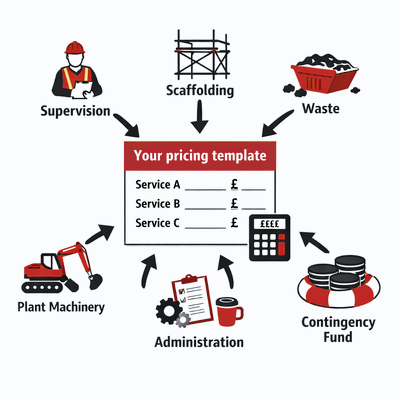
A disciplined pricing template solves this. By including proper allowances for supervision, scaffolding, waste, plant, admin time and contingency, you finally present quotations that reflect the true cost of delivering a quality job. Strong pricing forces your business to win work at the right margin.
4. Plan your weeks before they swallow you
When every week feels frantic, it is usually because the week is leading you rather than the other way around. This is why I encourage twenty minutes of quiet planning on a Sunday.
That short session creates clarity for the week ahead. You choose the three tasks that matter most, schedule when materials need ordering, decide who needs an update and block out time for admin that usually gets ignored. Win the week on Sunday.
5. Use a simple lead-flow plan
Many builders believe they need more enquiries, but what they often need is consistency in visibility. A simple weekly routine is enough to lift your pipeline.
Check in with architects, follow up quotations, post one meaningful update and reach out to past clients. These touches keep your name circulating in the minds of people who can send you work. Small habits compound fast.

6. Create a one-sheet delivery system
The fastest way to stabilise operations as you grow is to standardise how jobs are delivered. A one-sheet delivery system keeps everything essential in one place.
It covers pre-site requirements, procurement planning, key client decisions, variation tracking, meeting notes, quality checks and snagging. Using this sheet on every project makes the business feel calmer and more predictable.
Action points for 2026
- Build your 12-month Freedom Forecast.
- Map a real 90-day programme and update it weekly.
- Lock a pricing template and stick to margin targets.
- Spend twenty minutes every Sunday planning your week.
- Stay visible with a simple weekly lead-flow rhythm.
- Run every job through a one-sheet delivery system.
Final word
Leadership is not about working longer hours or carrying every problem yourself. It is about setting the pace, making decisions with clarity and creating the structure your team can rely on.
Imagine a year where your sites run smoothly, your diary feels under control, your margins hold firm and your evenings belong to your family again. That is not a distant dream. It is the result of leading with intention.
2026 can be the year your business feels lighter, sharper and more profitable. Lead like a boss this year. Your team will rise with you and your business will finally run the way you always wanted it to.
Authors

Greg Wilkes
Greg works with ambitious construction business owners across the UK and Australia, helping them scale from small teams into structured, profitable companies. Greg coaches leaders to systemise their operations, win bigger clients, and build businesses that run without constant firefighting.