
The homes builders work on are changing. More customers are looking to improve energy efficiency, reduce running costs and futureproof their properties, meaning retrofit is becoming part of everyday repair, maintenance and improvement (RMI) work.
This isn't a niche market. There are around 30 million homes across Great Britain, and the repair, maintenance and improvement (RMI) sector is worth more than £40 billion every year. As demand for improving existing homes continues to grow, builders with the right skills and knowledge will be better placed to win work, advise customers with confidence and stay competitive.
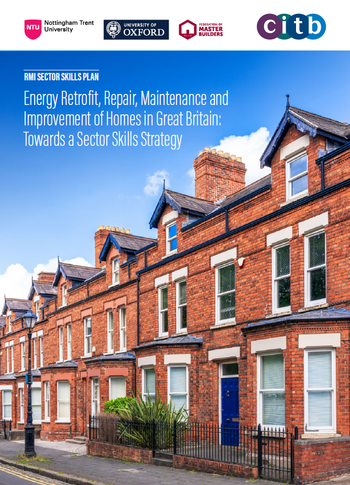
The new report from the RMI (Retrofit) Sector Skills Advisory Group, as part of the wider Repair, Maintenance and Improvement (Retrofit) Sector Skills Plan, alongside the FMB and the Construction Industry Training Board (CITB), written by experts at Nottingham Trent University and the University of Oxford.
Why this report matters to your building business
If you work in repair, maintenance, improvement or retrofit, the skills needed across the industry are changing. The report argues that retrofit and traditional building work are becoming increasingly connected, creating new opportunities and new skills requirements for builders.
It highlights the need for a long-term approach to workforce development that supports both existing tradespeople and the next generation entering the industry.
What's inside the report?
In this report, we look at:
- The scale of the retrofit challenge facing Britain's existing housing stock
- How retrofit and repair, maintenance and improvement work increasingly overlap
- Why competence, quality assurance and building performance matter
- The skills, knowledge and behaviours needed to deliver high-quality retrofit and RMI projects
- Challenges facing apprenticeships, training and workforce development
- The role of Government, industry and training providers in addressing skills gaps
- Opportunities arising from new technologies, digitisation and innovation
- Practical recommendations for policymakers, CITB and industry stakeholders
What this means for builders
For many builders, retrofit can sometimes feel like a specialist area separate from traditional construction work. This report explains why that distinction is becoming less relevant and what you need to know as the market develops.
As more homes require energy efficiency improvements, you are more likely to encounter retrofit considerations alongside routine repair, maintenance and improvement projects. Understanding how different measures interact with existing buildings will become increasingly important.
The report highlights the growing importance of:
- Investing in skills and training
- Understanding building performance and quality assurance
- Keeping up to date with changing standards and requirements
- Developing the knowledge needed to advise customers confidently
- Identifying new business opportunities linked to retrofit and home improvement
Download the full report
Download Energy Retrofit, Repair, Maintenance and Improvement of Homes in Great Britain: Towards a Sector Skills Strategy


